
Checking Criminal History in Knoxville
Begin by naming the event and the agency that made the record. A Knoxville officer report belongs with KPD. A current jail entry belongs with the Knox County Sheriff’s Office. City citation data belongs with Knoxville City Court when the form names that court. Felony and most state-law case outcomes belong with the Knox County Criminal Court Clerk. This split matters because no single Knoxville criminal record screen combines each file.
- Ask KPD Records for a routine incident or crash copy, or use the City’s request portal for other police records.
- Give the report number, date, location, and names needed to identify the Knoxville police file.
- Read a citation for the named court, then contact City Court or the Knox County clerk as directed.
- Check KCSO for a current booking, then use county court records for charges and disposition.
- Use TBI TORIS only when the question calls for a statewide Tennessee name-based history.
For older court files or a certified result, the county clerk is the better stop than the police counter. The full county prosecution route appears in the Knox County criminal court case search.
Knoxville KPD Records Unit
KPD’s Records Unit works from the Public Safety Complex at 1650 Huron Street, Knoxville, TN 37917. Mail requests go to 1617 Saint Mary Street. The direct records line is 865-215-7231, and kpdrecords@knoxvilletn.gov is the published email. The counter is open on weekdays from 8:00 a.m. to 4:00 p.m. Knoxville residents can ask there for routine incident and crash copies. A mailed request needs payment and a self-addressed stamped envelope.
The official Knoxville Police Department page shows how the city routes police contacts and public services.
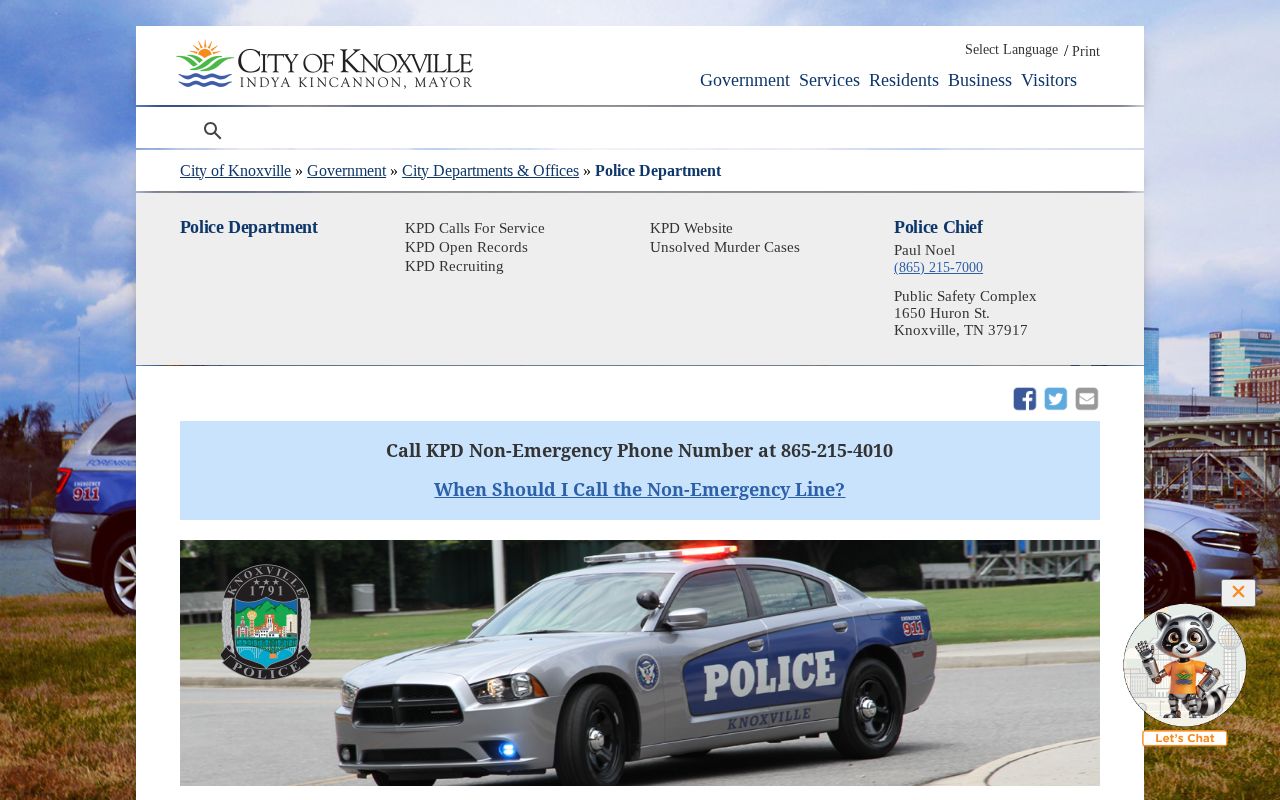
That city source is the right starting point when the record was made by a Knoxville officer, not a sheriff’s deputy or state trooper.
Routine Knoxville paper copies cost $0.15 per page. The counter accepts cash, check, or money order. PurchaseTNCrash offers a $10 digital crash-report route. KPD also provides a $10 local check that requires government photo identification and a Social Security card. It covers local Knoxville material and should not be confused with the Tennessee Bureau of Investigation’s statewide TORIS product.
Knoxville Police Department Records
KPD is the custodian of Knoxville reports its officers create. That includes incident narratives and arrest reports, subject to redaction or withholding rules. The Knoxville city directory number is 865-215-7000, while the current nonemergency line is 865-215-4010. A requester should identify the event by report number when known, date and time range, street or block, and involved names. Clear facts help staff distinguish two Knoxville events with similar details.
The City may withhold or redact an active investigation, juvenile information, protected victim data, medical facts, Social Security numbers, or security-sensitive material. The police report is also not the court judgment. It records the officer’s account and the action taken at the time. A later charging paper can amend or replace the intake allegation, and only the court file shows the case outcome.
Knoxville NextRequest and Video Records
Police records outside routine incident and crash copies go through the official KPD NextRequest portal. Its landing page has a Make Request control and says a representative will respond within seven business days. The live form did not expose a stable list of fields during research, so requesters should follow the prompts rather than rely on an assumed checklist.
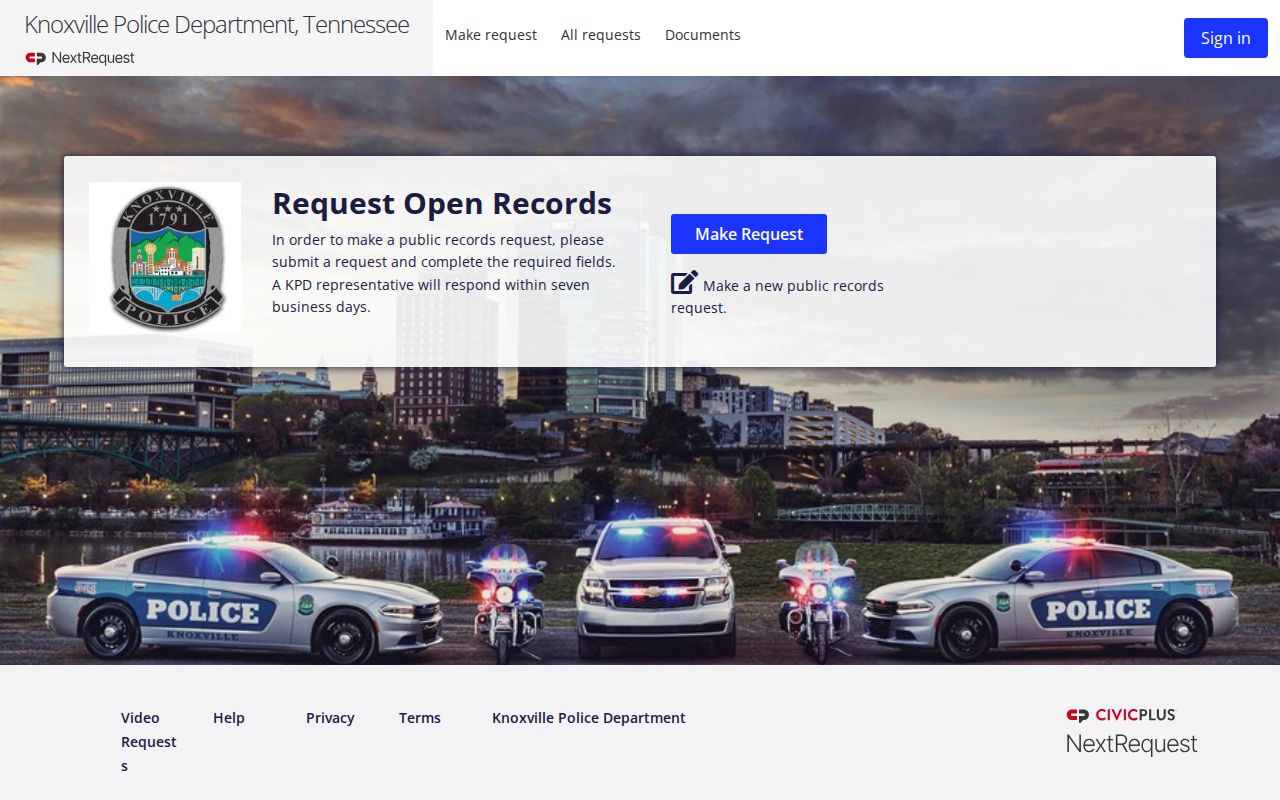
The portal separates broader Knoxville police requests from the simple counter and mail route used for routine copies.
Knoxville camera video has its own gated application. A requester signs up, logs in, starts a video request, and selects Download Link as the copy preference. KPD publishes a $10 base charge per officer video. Production time costs $10 for the first hour, $15 for the second, and $25 for each later hour. The minimum turnaround is ten working days. When more than five Knoxville officers were involved, added names belong in Incident Details. These rules make video a distinct request, not an automatic attachment to a paper incident report.
Knoxville Arrests and Bookings
A Knoxville arrest can create four files in short order. KPD writes the city incident or arrest report. KCSO creates the booking entry once the person enters county custody. A judicial commissioner or court creates bond and appearance records. TBI can then receive the fingerprint arrest cycle for a reportable misdemeanor or felony. Those files may show different charge wording while the case is new.
Knoxville does not use its City Court as a felony court or its police records counter as a jail roster. Current booking questions go to the official KCSO inmate population or 24-hour booking channel. The detention facility number is 865-281-6700, and jail information is 865-342-9620. For every documented channel and the difference between intake allegations and case results, use the Knox County arrest lookup.
Note: An arrest or booking entry is an allegation and custody event, not proof that a Knoxville court entered a conviction.
Knoxville Custody Crosses City Lines
The Knoxville arresting agency and the booking custodian can differ. KPD may make the arrest inside Knoxville, yet KCSO holds the county booking record at its correctional facilities. That division is normal. Request the Knoxville officer narrative from KPD and confirm current custody with KCSO. If a person is later sent to state felony custody or supervision, Tennessee Department of Correction FOIL becomes the proper status tool. FOIL is not a KPD arrest log.
This city-to-county handoff also explains why a name can appear in one source before another. Booking occurs near the start of the process. The clerk docket follows judicial action, and TBI’s history depends on agency fingerprint and disposition reporting. A person researching an older Knoxville case should compare the final court judgment with the arrest cycle rather than treating a booking label as the last word.
Municipal Court Records in Knoxville
Knoxville City Court sits at the Public Safety Complex, 1650 Huron Street. It hears city ordinance matters, traffic and parking citations, and specified municipal violations. It may impose fines up to $50. The court is not a substitute for Knox County General Sessions or Criminal Court, and no verified public online City Court docket was found.
The general City Court number is 865-215-7500. Administrator questions go to 865-215-7474, and email goes to citycourt@knoxvilletn.gov. Counter hours are weekdays from 8:00 a.m. to 4:00 p.m., with a limited reopening at 5:00 p.m. Tuesday for Night Court. Sessions begin at 9:00 a.m. Monday, Wednesday, and Friday. Tuesday Night Court begins at 5:30 p.m.
The official Knoxville City Court source defines the court’s local reach and Public Safety Complex location.
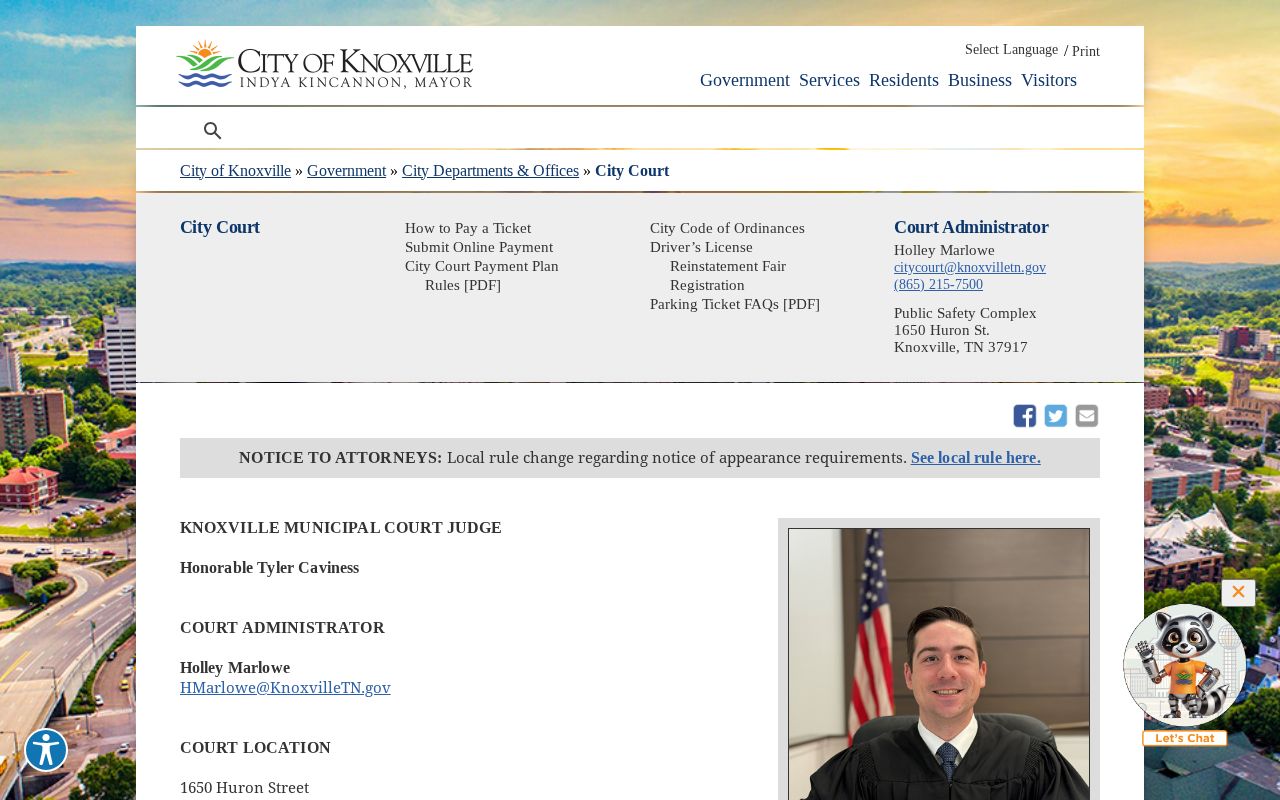
The source helps a reader keep a city-code file separate from a county criminal prosecution.
| Court Name | Knoxville City Court |
|---|---|
| Case Types Heard | City ordinance, traffic and parking citations, and specified municipal violations |
| Case Lookup Channel | Phone, email, counter, or public court session; no verified online docket |
| Inquiry Details | Requester name, address and date of birth; cited name, citation number, issue date, and comments |
| County Limit | Felonies and most state-law criminal cases belong in Knox County courts |
Knoxville Citation Color Trap
Color gives a clue, but the printed court controls. Green citation copies generally point to Knoxville City Court and often come from KPD, UTPD, or City Codes. Pink or yellow copies generally point to Knox General Sessions and commonly come from KCSO or the Tennessee Highway Patrol. A KPD officer can still issue a green form for a state-law offense assigned to General Sessions.
Read the court name, citation number, and offense before calling. When the citation points to City Court, an email inquiry should include the requester’s name, address, and date of birth, plus the name on the citation, citation number, issue date, and comments. When it names General Sessions, City Court staff cannot supply the county criminal file. This small check can prevent a wasted trip to the wrong Knoxville counter.
Where Knoxville Records Go
A report stays with the agency that wrote it, but the related criminal case soon moves beyond that one custodian. A KPD arrest may lead to an initial appearance and a General Sessions case. Felony accusations can then pass through the grand jury into one of the county’s three Criminal Court divisions. The clerk reports dispositions for association with the fingerprint arrest cycle held by TBI.
Record flow: Knoxville Police Department › Knox County Courts › Tennessee Bureau of Investigation
Use KPD for the Knoxville officer report, KCSO for present county custody, the clerk for the filed charge and final judgment, and TBI for a statewide name-based history. Federal cases in the Knoxville Division require a separate PACER search. Each Knoxville channel answers a narrower question, so an empty result in one source does not clear all the others.
Knoxville Public Safety Data Limits
KPD publishes city calls-for-service and preliminary offense data, but neither source is a criminal history database. The calls list updates every two hours and shows a street address or block range, nearest cross street, and call type. The dashboard refreshes at 4:00 a.m. and can filter by date, call type, disposition, and district. Listed outcomes include Arrest/Citation/Warning/Warrant, Cancelled, No Disposition, Service/Miscellaneous, and Unable to Locate.
The official Knoxville public dashboards page explains the scope and refresh timing of these city data tools.
The visual source reinforces the main limit: a call, an offense report, an arrest, and a conviction are four different events.
The preliminary offense dashboard refreshes at 4:30 a.m. and filters by date, offense, and Central, East, or West district. KPD warns that the TIBRS/NIBRS figures have not yet been audited by TBI. Its 2024 review reported 42 nonfatal shooting victims, down from 77 in 2023, and 23 murders, down from 24. Those are city police measures. They cannot be assigned to Farragut or all of Knox County.
UTPD Records Within Knoxville
The University of Tennessee Police Department has its own campus jurisdiction inside Knoxville. When UTPD created the report, the request should begin with UTPD rather than KPD. Its public safety number is 865-974-3114. A later county booking may still appear through KCSO, and a state-law case may still reach General Sessions or Criminal Court.
The official University of Tennessee Police source provides the campus police contact and records path.
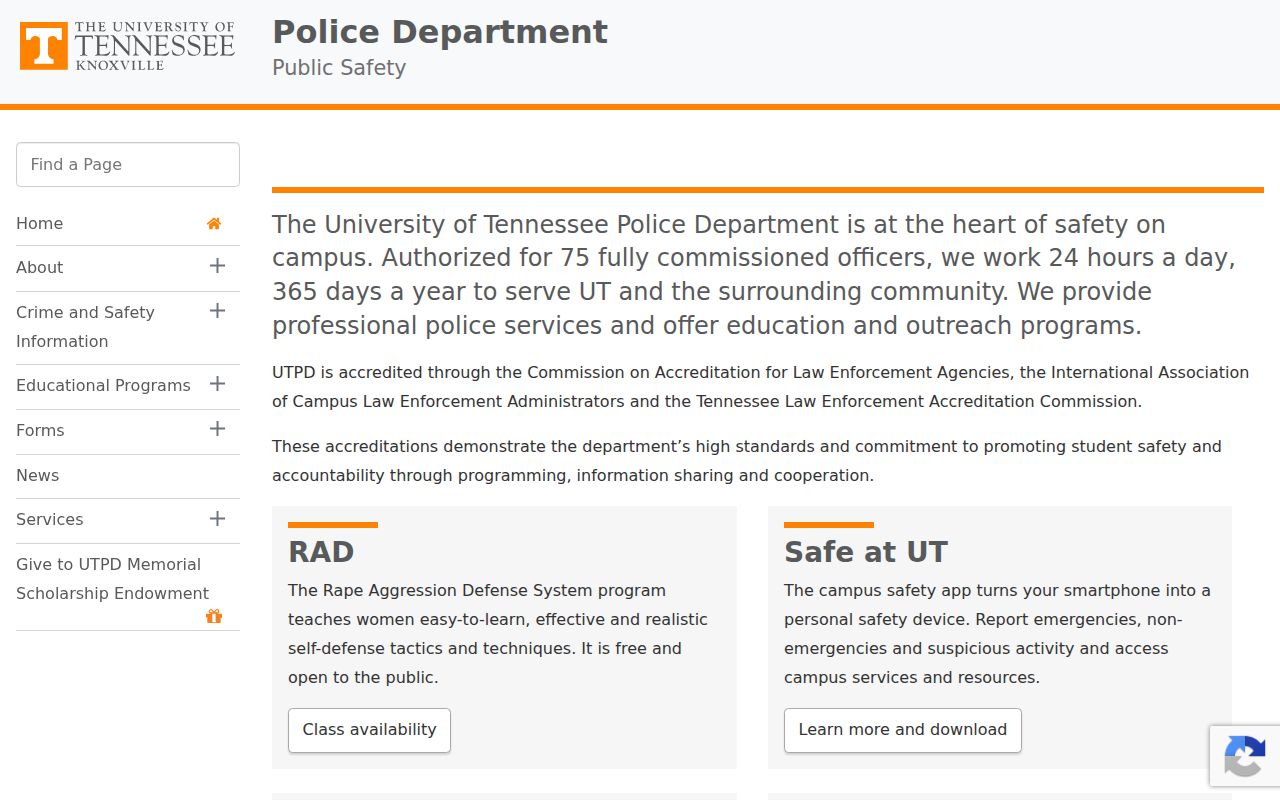
That agency layer is one reason location and officer department matter as much as a name during a Knoxville records search.
THP presents the same custody split for state-highway enforcement. A trooper report belongs with the Tennessee Department of Safety and THP, not KPD. If the person was accepted into Knox County custody, KCSO creates the booking record. Call the issuing agency first when a citation or report header shows who made the stop.
Public Access Rules in Knoxville
Knoxville police and municipal court access begins with the Tennessee Public Records Act, but openness has limits. Tennessee citizens may inspect public records unless another law makes the material confidential. The custodian may redact protected identifiers, victim or minor information, or other exempt content. An active investigation can also limit release. A request does not restore a sealed or expunged file to public view.
Key Statutes:
T.C.A. §10-7-503 makes Tennessee public records open to state citizens unless law provides an exception.
T.C.A. §10-7-504 and court access guidance support lawful redaction and withholding of confidential material.
T.C.A. §40-32-101 controls expungement of qualifying Tennessee charges and convictions.
Ask the actual custodian for the exact Knoxville record. KPD handles its report, Knoxville City Court handles its municipal file, KCSO handles county booking data, and the Knox County clerk handles the judicial disposition. That approach is faster and keeps each Knoxville criminal record in its proper legal setting.